Haa Valley, the smallest and one of the least-populated districts in Bhutan, lies southwest of Paro across the Chele La Pass, one of the highest motorable passes in the country at around 3,988 metres. It was only opened to tourists in 2002, later than almost anywhere else in Bhutan, so it still feels noticeably quieter than Paro or Thimphu. The valley is home to the twin Lhakhang Karpo and Lhakhang Nagpo (White and Black Temples), built in the 7th century around the same time as Paro's Kyichu Lhakhang, and to communities of yak herders and farmers growing apples, potatoes, and buckwheat on the valley floor. Haa is also the only place in the world where the rare blue poppy, Bhutan's national flower, grows wild, and its wooded ridges and quiet trails make it a good stop for hikers looking to get away from the more visited parts of the country.
Connecting the districts of Paro, Samtse and Chhukha, the Valley covers an area of 1706 sq.kms. It was only made available to tourists in the year 2002 and has been a hub for trekkers and nature enthusiasts ever since. Strategically located at a distance of 30kms from Paro, Haa Valley can be reached through the Chele La Pass.
Bhutan's choicest trekking trails and mountain biking trails are organised around this region. The people of Haa Valley follow the teachings of the 8th Guru Padmasambhava, which are noticeable in the traditions and the festivals held in the region. One of the most popular festivals celebrated by the Haa tribal and Nomads is the Haa Summer Festival that is usually held in July. Apart from the festival season, the best time to visit the region is from October to November.
Read More
More on Haa Valley Travel
Ap Chundu - The Guardian Deity of Haa
Haa Valley was home to some gruesome animistic rituals done to appease the guardian deity, the beliefs of which are still reflected in their rituals and celebrations Shamanistic rituals were practised widely before the 8th century.
The region also has a presence of tantric culture. However, with the influence of Guru Rinpoche who reduced the power of the deity, the region now follows Buddhist practices and traditions alongside some old practices. The Gyechu Lhakhang is dedicated to that very deity ( Ap Chundu) and is believed to have tantric connections.
The Haaps (people living in Haa) believe in living in a manner that does not upset or challenges the deity who is said to cause earthquakes, landslides, floods and other disasters. A number of legends are also associated with Ap Chundu whose presence locals say they feel in their lives and hence hold the deity in very high regard.
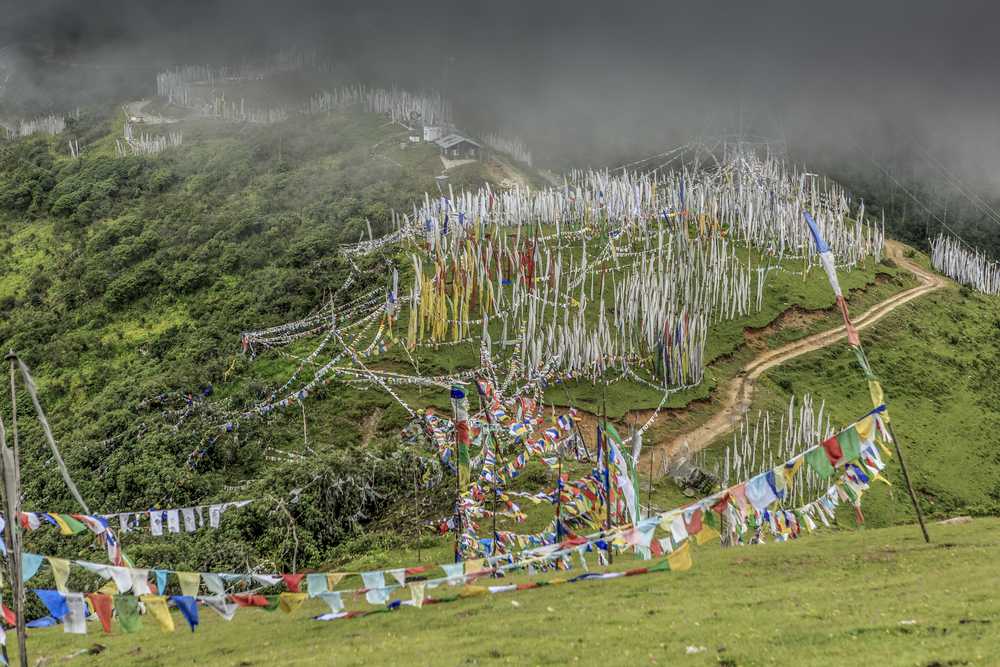
Source On the drive to Haa Valley through lush forests, one shall cross the Chele-La Pass, one of the highest motorable roads in Bhutan located at 3988m above sea level where one can get a clear view of Mt. Chomolhari and Jichu Drake. A sight of utmost and stunning beauty, it is a perfect spot to enjoy the view with a short walk and maybe a hot beverage.
2. Lhakhang Karpo and Lhakhang Nagpo
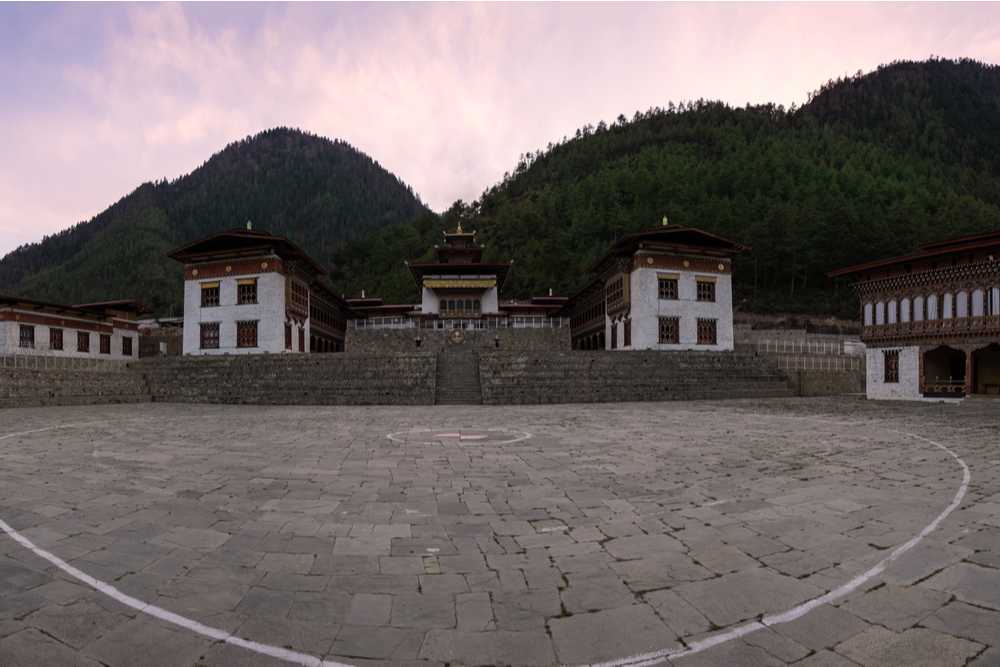
Source Also known as the White Temple and Black Temple, these are the two prominent spots for tourists in the valley. According to legend, King Sonsten Gampo had released two pigeons for making the temples. the Black Temple was constructed where the Black pigeon landed and the White Temple was made where the White pigeon landed. Both the temples are considered highly auspicious.
There is also a chorten nearby with the imprint of Guru Rinpoche's body and hat. (A word of caution: Tourists are expected to dress respectably and modestly while visiting temples and other religious institutions. Shoulders must also be covered inside religious establishments. Since shoes are to be removed before entering a religious building, it is advisable to wear socks.)
3. Haa Goempa
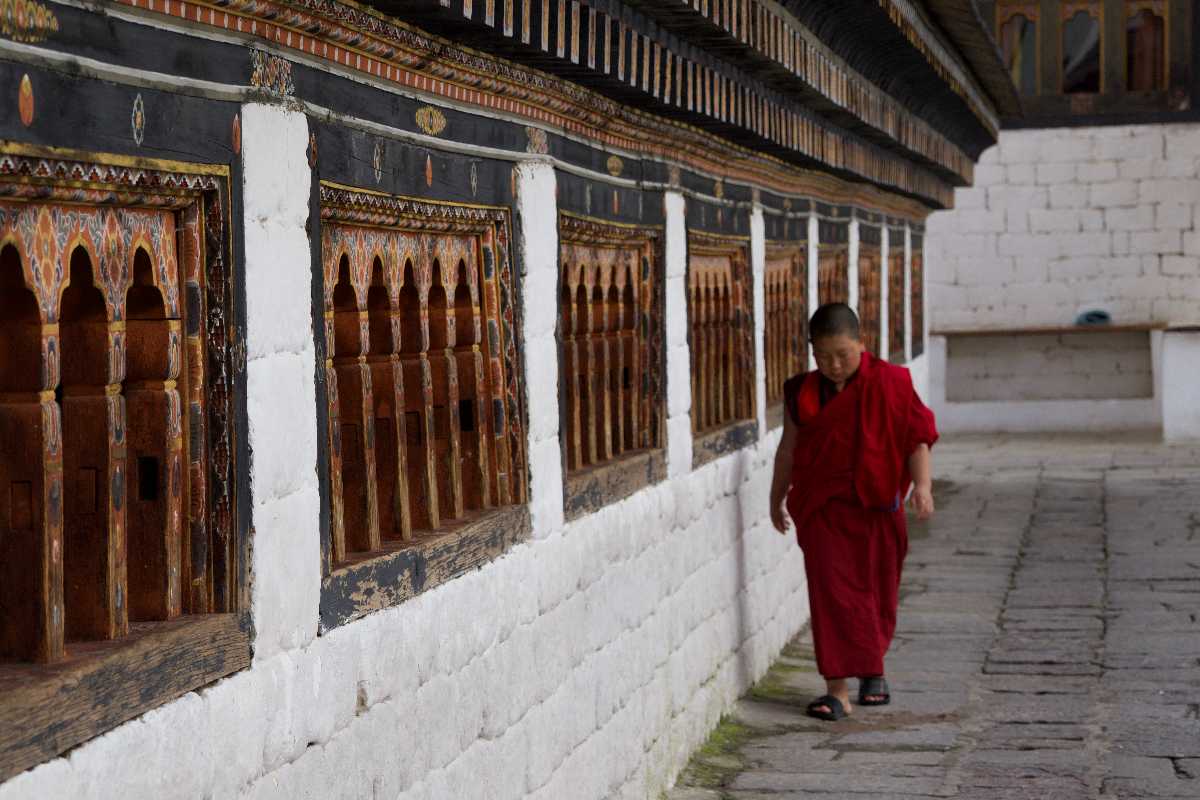
Source Situated close to the Black and White temples, the Haa Monastery is said to have been the result of some mystical celestial event. It was constructed at the site where Buddha in the avatar of a pigeon, lured local farmers to the spot with strange, mystical sounds and visions of fires.
4. Gyechu Lakhang/Chundu Lhakang
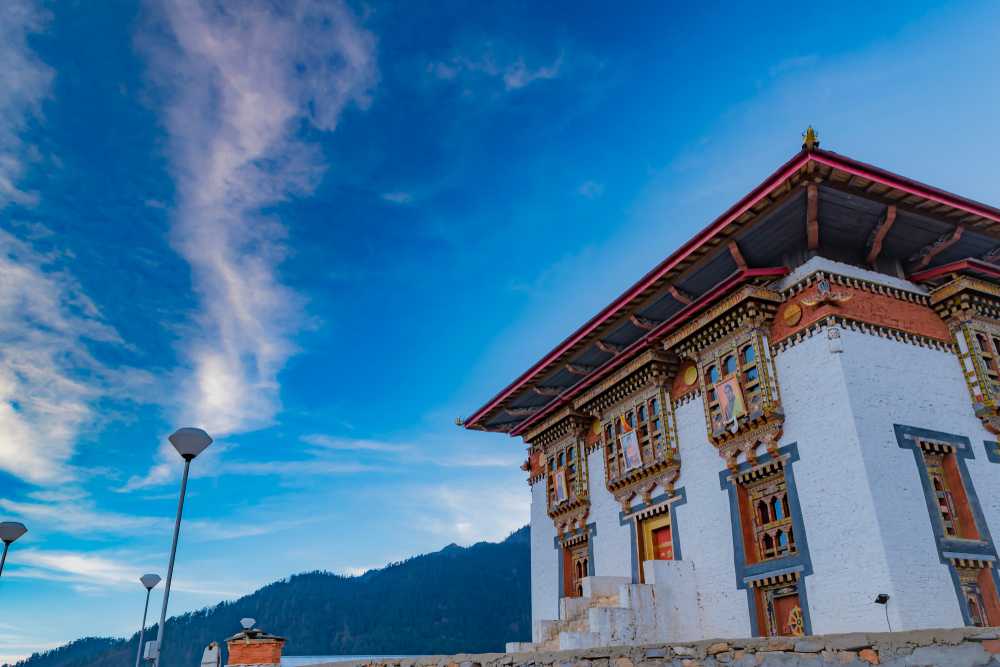
Source This is dedicated to the vicious guardian deity of the Haa Valley and contains statues of Ap Chundu and Joya. It is said to have Tantric connections. Visitors are advised not to stare too long due to tantric repercussions. It is a very popular pilgrimage site for the Bhutanese people. It signifies the traditions that existed prior to the 8th century.
5. Yangthong and Katsho Goempa
Source Located 7 km from Haa, the Yangthong monastery contains beautiful murals of Guru Padmasambhava's paradise and of mermaid deities. Katsho Goempa is a small monastery is in Katsho Village and is better visited for the trail that leads up to it than the actual monastery itself.
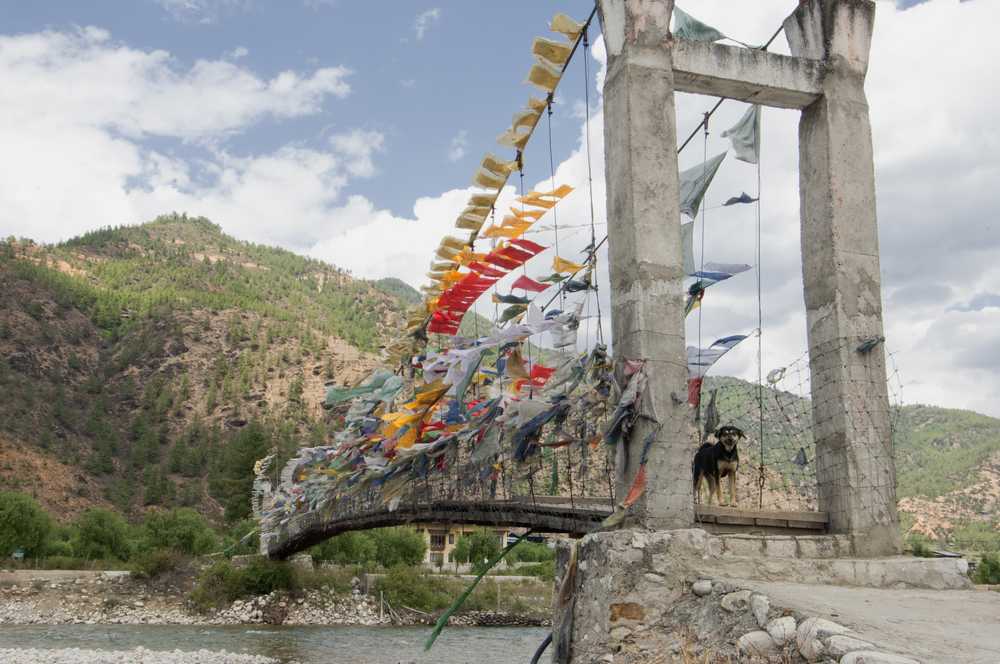
This is a bridge linking the Haa Valley to the Samarpudung Valley and is believed to have magical powers. One could make a wish in the wishing cow lake below where the stone udders of the cow are said to be visible.
Other Activities Haa Valley is a highly recommended spot for all nature enthusiasts and trekkers because it has a lot to offer in terms of natural beauty with thick forest cover and mesmerising rivers to walk along. Hiking, cycling and trekking are popular activities in this region.
The route to Chele La Pass is particularly popular for cycling and motorcycling tours. During the Summer festival, apart from devouring the delicacies, one could ride on horses and yaks and take part in games of archery, Khuru and Soksum.
Best Time to Visit Haa Valley
How to Reach Haa Valley
How to Reach Overview
Haa Valley is located 65 kms away from Paro. The journey can be made by bus or by car. There are no routes between Paro and Haa Valley via flight or trains. The most convenient option would be to travel by car, as it takes only two hours and the timings can be flexible. There are bus services available. However, there is only one bus between these two districts and the schedule is not convenient. The routes, however, are picturesque.
October and November is the best time to visit Haa Valley as this is period which enables the most breathtaking view of the snow-capped Mt. Jomolhari and Jichu Drake which can be seen from the Chele La Pass between Paro and Haa Valley.
June - August is the summer monsoon season. Average maximum temperature varies between 25°C - 27°C while the average minimum temperature varies between 12°C - 17°C. The Haa Summer Festival is organised over a few days in summer by the Tourism Council in collaboration with the Bhutan Olympic Committee and the Haa District Administration. This festival celebrates the Bhutanese nomadic lifestyle, culture, involving religious performances and sports and cuisine in which one can not only try the local Haap delicacies but also participate in the games and activities as part of the festivities.
Autumn season from September - November has mild weather with clear skies and conditions conducive for trekking and hiking. December - February during Winters are quite cold with temperatures dropping as low as -1.7°C in the month of January. However, it is also the season of a number of festivals and rituals, commencing with the birth anniversary of Ap Chhundu (Bho-Yak). Read More
What is the best way to reach Haa valley?
Haa Valley is located 65 kms away from Paro. The journey can be made by bus or by car. There are no routes between Paro and Haa Valley via flight or trains. The most convenient option would be to travel by car, as it takes only two hours and the timings can be flexible. There are bus services available. However, there is only one bus between these two districts and the schedule is not convenient. The routes, however, are picturesque. Read More
What are the places near Haa valley?
The top places near to Haa valley are Paro which is 30 km from Haa valley, Thimpu which is located 51 km from Haa valley, Punakha which is located 78 km from Haa valley, Gangtok which is located 56 km from Haa valley, Wangdue phodrang which is located 76 km from Haa valley
 13 out of 43
Places in Bhutan
13 out of 43
Places in Bhutan